
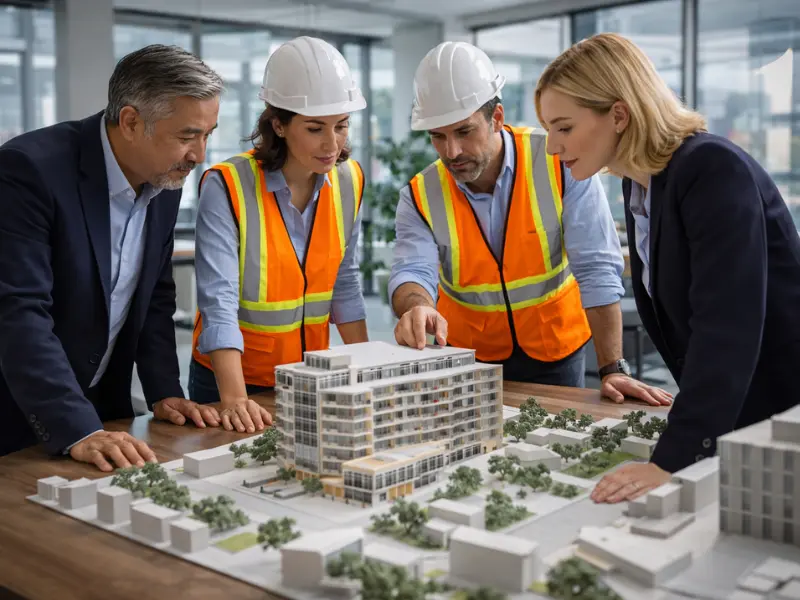
In Palm City, many construction problems do not begin in the field. They begin during collaborative project planning, when architects, engineers, owners, and contractors move forward without a fully aligned strategy. At first, the process may look organized on paper, but if responsibilities, priorities, and technical expectations are not clarified early, small inconsistencies can grow into major delays. In a market where timelines, budgets, and quality standards matter, poor coordination in the planning phase can weaken the entire project before construction even starts.
Mistake #1: Waiting Too Long to Involve All Disciplines
Another major issue is delaying multi-disciplinary design input until later stages. Some projects begin with a narrow planning discussion and only expand coordination once design documents are already developing. That approach often creates avoidable friction. Mechanical, electrical, structural, civil, and architectural decisions affect one another from the beginning, especially in projects where site limitations, permit requirements, and scheduling pressure all overlap. If one discipline is brought in too late, the team may need to redesign work that could have been resolved with earlier collaboration.
This problem becomes even more serious when the project moves quickly. Owners often want fast progress, but speed without structure can hurt engineering team integration. Teams may rush into design development without enough constructability review, budget alignment, or field perspective. As a result, the planning phase becomes reactive instead of strategic. Rather than solving issues in advance, the team ends up correcting them later through change orders, design adjustments, and timeline extensions.
Mistake #2: Ignoring Budget Reality During Planning
Another costly mistake is treating cost as a separate conversation instead of part of collaborative project planning. A design may look excellent and still fail if it is not grounded in realistic construction pricing, lead times, and procurement conditions. In Palm City and across the Treasure Coast, market conditions can shift quickly, and that means design decisions should be tested against real-world cost implications as early as possible.
When budgeting is delayed, teams often discover that the selected systems or materials do not align with the available investment, leading to redesign and frustration. In TRM Construction Management we offer construction management services to support planning, budgeting, permits, and project completion with a focus on finishing on time and within budget and this is exactly where stronger engineering team integration creates value.
When engineers, architects, and construction leadership review scope together early, the team can make smarter decisions before documents are finalized. Cost awareness becomes a planning advantage rather than a late-stage obstacle. That improves confidence, reduces redesign, and helps owners move forward with fewer surprises.
Mistake #3: Overlooking Documentation and Accountability
Many planning breakdowns are not caused by lack of talent. They happen because there is no disciplined system for decision tracking, documentation, and file control. Without clear records, teams lose visibility into what was approved, what changed, and who is responsible for follow-through. That weakens multi-disciplinary design input because coordination depends on reliable information.
When decisions are scattered across emails and verbal conversations, accountability fades and project clarity suffers. For this matter, we in TRM Construction Management offer document control, reporting, and project file coordination as important tools to keep construction work organized and transparent. A better process keeps collaborative project planning active instead of one-time.
Planning should continue through design development, preconstruction, and execution, with every major decision documented and shared clearly. That gives architects and engineers a more stable framework to collaborate within and helps owners maintain visibility throughout the job.
How TRM Construction Management can help in Palm City
For companies, investors, and property owners in Palm City, choosing the right management partner can reduce many of these planning mistakes from the beginning. TRM Construction Management is both a construction management firm and a commercial general contractor, giving clients a more centralized path from planning and design through execution.
We coordinate and supervise the full construction process, handle permits and licenses, and support projects with a single point of communication designed to reduce confusion. In addition we offer project management, feasibility support, tenant build-out experience, and owner’s representative services.
That kind of structure can support stronger architectural coordination and more reliable engineering team integration, especially on projects where multiple parties must stay aligned under tight deadlines. When one team helps connect planning, budgeting, communication, and delivery, collaboration becomes more practical and more effective.
Avoiding Collaborative Planning Mistakes in Palm City
The biggest mistakes in collaborative project planning usually come from delay, misalignment, and incomplete communication. In Palm City, those issues can quickly affect quality, cost, and delivery if they are not addressed early. The best results happen when architects, engineers, and construction leaders work from a shared strategy supported by timely decisions, clear documentation, and meaningful multi-disciplinary design input.
For anyone preparing a commercial build, renovation, or complex property improvement, the message is simple: better planning creates better outcomes. With stronger architectural coordination, more consistent engineering team integration, and the right management support, projects can move forward with far less friction and much greater confidence.