
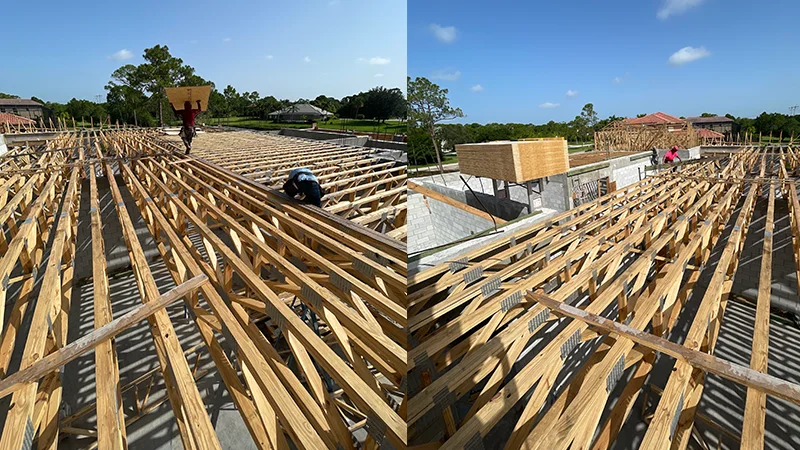
Fort Pierce’s construction landscape is as dynamic as its waterfront, blending historic renovations with new commercial and residential developments. In such a diverse market, certain persistent myths about how projects should be run can hinder progress and profitability. Many contractors and developers in the Fort Pierce area operate on outdated assumptions about construction workflow planning and site logistics management, believing that “how we’ve always done it” is good enough. However, in today’s competitive and complex environment, these myths can be costly.
This article tackles the most common misconceptions head-on, separating fact from fiction to reveal how a modern, strategic approach is essential for a smooth construction process flow and successful project outcomes in Fort Pierce.
Myth #1: “A Large Site Solves All Logistics Problems”
The Myth: Many believe that because Fort Pierce offers more spacious sites compared to dense urban areas, detailed site logistics management is unnecessary. The assumption is that ample space automatically prevents congestion and sequencing issues.
The Reality: A large site without a plan is a recipe for chaos and inefficiency. While spatial constraints may be different, the fundamental need for organization is not. Without a strategic plan for site logistics management, you often end up with excessive travel distances for workers and equipment, materials staged too far from the point of installation, and a disorganized sprawl that slows down every operation. Effective build sequence optimization is actually more critical on a large site to prevent wasted movement and ensure a logical, linear progression of work. Space is an asset, but only if it is managed with intention.
Myth #2: “Sequence Optimization is Only for Large, Complex Projects”
The Myth: Some smaller or mid-sized contractors in Fort Pierce operate under the assumption that build sequence optimization is a luxury reserved for multi-million dollar skyscrapers, not their custom homes or commercial tenant fit-outs.
The Reality: The principles of build sequence optimization are scalable and beneficial for projects of any size. The cost of a sequencing error—such as having to tear out newly installed drywall to access electrical wiring that was forgotten—is proportionally just as damaging to a small project’s budget as it is to a large one. For any project, an optimized sequence prevents rework, reduces cleanup time, and ensures that subcontractors can work efficiently without tripping over each other. It is a universal tool for protecting profitability.
Myth #3: “A Good Crew Can Overcome a Poor Process Flow”
The Myth: This is a stubborn and costly myth: that skilled, experienced tradespeople can compensate for a disorganized construction process flow. The belief is that hard work and hustle can solve any logistical problem.
The Reality: While a talented crew is invaluable, forcing them to work within a flawed system burns out your greatest asset. When the construction process flow is broken, skilled workers spend their time solving preventable problems, waiting for materials, or redoing work instead of applying their expertise productively. This leads to frustration, decreased morale, and higher turnover. A clear, well-communicated process empowers your crew to do their best work efficiently and safely, maximizing their talent rather than testing their patience.
The Truth: Integrating Planning and Management for Success
The underlying theme in debunking these myths is that success in Fort Pierce’s construction market requires an integrated approach. Superior construction workflow planning cannot exist without thoughtful site logistics management, and both are dependent on rigorous build sequence optimization to create a seamless construction process flow.
This level of integrated planning requires a specialized focus. For many general contractors, managing this complexity internally can divert attention from field operations and client relations. This is where a partnership with a dedicated construction management firm proves its worth.
TRM Construction Management excels by applying a disciplined, methodology-driven approach that directly counters these common myths. They provide the strategic oversight that many projects lack, focusing on:
- Evidence-Based Planning: TRM replaces assumptions with data-driven strategies for site logistics management and construction workflow planning, creating a foundation for success based on proven principles, not folklore.
- Holistic Sequence Development: They specialize in build sequence optimization for projects of all scales, ensuring that every task, from site work to punch list, is logically ordered to eliminate waste and delay.
- Process Implementation: TRM instills a robust construction process flow that creates clarity and accountability for every stakeholder, ensuring that the plan is executed effectively from start to finish.
Conclusion: Building on a Foundation of Facts in Fort Pierce
The future of construction in Fort Pierce belongs to those who build on a foundation of modern, strategic principles—not outdated myths. By embracing an integrated approach to construction workflow planning and site logistics management, and recognizing the universal value of build sequence optimization, contractors can achieve a level of efficiency and predictability that sets them apart.
Partnering with an expert like TRM Construction Management provides the framework to turn these principles into practice, ensuring your next project in Fort Pierce is a model of efficiency, not a testament to outdated beliefs.